

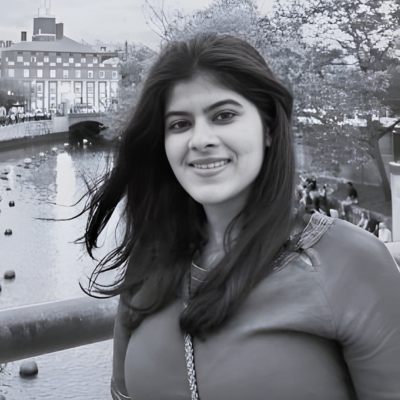
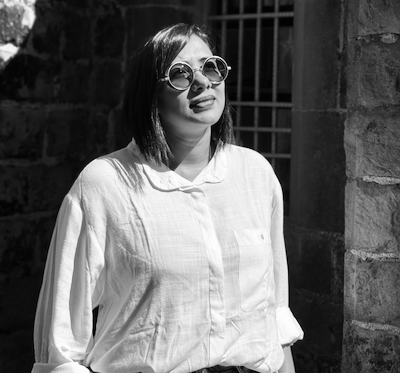
Chhavi Jain and I first met at the Jaipur Literature Festival in 2018. Back then, she was working with Jaipur BookMark, the business segment of the festival, and I was representing Ojas Art, an Art Advisory team overseeing the festival’s art installations. What brought us together, beyond a whirlwind of literature, was the shared passion for Indigenous art practices in India. While I have continued my work in India, three years ago Jain moved to Providence, Rhode Island to pursue the Global Arts and Cultures Master’s program at the Rhode Island School of Design (RISD). There, she produced her research in a book titled, Curating within Indigenous Ecosystems of Art and Storytelling. The following interaction is a part of a larger conversation that we conducted over the phone about Jain’s research, curatorial vision and professional journey. Her professional association includes institutions like the RISD Museum, Studio Loba LLC in the States, and Anant Art Gallery, and Inherited Arts Forum, in India. She is presently based between Rhode Island and New Delhi and works as an art consultant, curator and writer.
Urmila Banu: To kickstart the conversation, I’d like to ask about your academic journey—from English Literature at Delhi University to Global Arts and Cultures at RISD, has been very interesting to see. When you turn back and reflect on this trajectory, how have these experiences shaped your curatorial and consulting practice?
Chhavi Jain: My academic training in Literature informs my curatorial and research work in more ways than one. The disciplines that I have studied for almost seven years (Bachelor’s and two Master’s degrees), informs my outlook of the world and the way in which I interact with it. Art essentially is a subjective endeavor. So, I work with creating art, curating, researching and writing, with a keen interest because I get to experiment and explore with storytelling and test out methods that are effective in communicating what I, as a curator, or the artist wants to convey. My grounding in liberal arts allows me to be multidisciplinary. A literature degree by itself is not a ‘professional’ degree. That is to say that it doesn’t train in a specific, singular way. Rather, it opens a world of things to explore. Along with learning about language and reading lots of books, the program held space for thinking, researching and writing critically, reading between the lines, and working with discretion. In that, we are not taught ‘what to think’, but ‘how to think’– which has really changed the game for me. It took me a while to understand how my academic learnings translate professionally, but now I am in a space where I am equipped with a purview to understand and work with perspectives that are outside of my knowledge system. Additionally, the Global Arts and Cultures program has enabled me to set up the building blocks for a more global practice that I hope will allow me to create a powerful global practice. With all this, my approach is quite fluid wherein I choose to work across the board — making art, curating, writing, administering and educating—not having to choose just one, but really get my hands dirty.
Urmila Banu: I remember that you once mentioned your family’s migration from Sialkot during the Partition of 1947. In your thesis book, I read your account on displacement and migration and really liked how it tied into resilient legacies, such as the “sweet tooth” that you have written about. How did this act of returning to your family’s history and archive shape, or find its place within your larger work?
Chhavi Jain: This process of looking inward began upon the insistence of my thesis advisors at RISD who urged me to think about my positionality statement. My research process was a lot of reading, but also talking to community members, visiting exhibitions and studios, diving into different iterations of the archive including oral sources. So I was listening to some deeply personal and familial stories from the artists and a curator of the Narragansett tribe in the US, as well as from the Gond community in India. They made me think about all the ways in which I was ‘positioned’ and the story of my people, my family in the context of my research. Incidentally, my family’s history of migrating from our ancestral home in Sialkot (which is now in Pakistan), to Delhi, where I was born, kept coming back to me. There were so many anecdotes that we grew up listening to my home and it had been passed down through the generations. That’s when I decided to undertake this work of mapping the pieces of this history together and writing about them for the first time. At the time I did not know whether it would be a part of my book, but the impetus to put it out there in writing was strong. Eventually, it became the Prologue to my book, which sets the stage for my research on storytelling and art as powerful expressions of inherited legacies, origins and its continuance; I make the case that legacies are resilient, and they make us resilient too.
Now in the curatorial sphere, I like to work with histories, orality, storytelling, migration, resistance and resilience that comes from the narratives around me. Through the rigorous process of researching and collecting stories, I look at legacies as embodied and as part of our ancestors that we carry with us. It can be seen in resemblances, habits, dispositions, what we are drawn to, our preferences, how we react in situations, health, etc. We inherit them from our people, ancestors, whom we may have never met or even known. Similarly, within my community the shared love for sweets is celebrated as a legacy of being a ‘Sialkoti’ (people from Sialkot). It tells us that we may have been displaced from our home for many generations before building a new home, but we will carry a part of our ancestors within.
UB: It is quite evident that the idea of home—fractured, reclaimed, and reimagined—permeates your curatorial philosophy and navigates the tensions of displacement and cultural hybridity. Your book, Curating within Indigenous Ecosystems of Art and Storytelling, weaves together personal history and various Indigenous narratives, focusing on the Gond community from India and Narragansett tribe in the States. Could you elaborate on your research and experience?
Chhavi Jain: In my book I talk about the differing contexts of Indigeneity in India and the United States. Indian, or rather South Asian indigeneity does not fit the western binary logic of ‘settler colonial’ and ‘indigenous’. India was colonized and annexed multiple times through history, so placing a finger on who belongs and who doesn’t is a complex hypothesis. India, even when it was not known as India, had a way of making people its own, we see that in the diverse population identifying with different languages, religions, cultures, and regions here — at the risk of sounding romantic, I must also point out that migration has come with centuries of violence inflicted upon the land and its people. The people have historically faced a different kind of erasure in terms of supremist assimilation and high death tolls. However, our constitution doesn’t regard any people or communities as “Indigenous”. Through the lens of the art world, I bring specific tribal communities from the two countries together and work with various theories of indigeneity. I do this because tribes across the art world are faced with a similar systemic violence. In response to this, marking presence and resisting colonial oppression brings “Indigenous” voices across continents together. Tribal communities have been marginalized, even criminalized for centuries. My research was focused on how the artists and curators today navigate the market while protecting themselves, what can be done at various levels of the community, from nation-states to a more global setting. I was building on the idea of best practices in Indigenous curation and talk about ‘care’ being at the core of the word ‘curate’. It’s meaning has evolved from caretaking of art collections to assuming responsibility and safeguarding the artists as well. This is a very nuanced subject with many opinions and practices, but since we are talking about the past and the present of communities, it is important to have space for collective thought and action and think through futurities.


Urmila Banu: As the global art world grapples with its colonial legacies, your work offers a crucial intervention and draws a light on how indigenous art practitioners struggle to ethically sustain in the commercial art market. In this context, let me ask you about your meeting with Mayank Shyam, Venkat Shyam and other artists in Bhopal, in summer 2023.
Chhavi Jain: Yes, that was a memorable trip. It was supported by a research grant from RISD. I moved away from what I had initially planned, but it worked out for me eventually because I went with a very open outlook. I went to learn about the music that exists within the community presently. We know about the visual art part of the Gond-Pardhan community, but the Pardhans, the community that Jangarh Singh Shyam belonged to, were actually a bardic community. This was before they began the visual work. For years they would create and sing songs, and recite poetry about the gods in their native villages. It was only in the 1980s when J. Swaminathan met Jangarh Shyam that he encouraged him to pick up the brush and render his imaginations and community stories visually.
When I went there recently, the artists and I had many conversations around art, music, language, family traditions, policies, roads, networks, way forward, and a lot more. I saw a shared nostalgia about Jangarh’s passing which shows how powerfully he had contributed to uplift his community. Venkat Shyam, Shyam’s nephew, was trained by him. He spoke very fondly of his early days with his uncle who took Venkat under his wing, like he did for so many others in their community. And so, as the community moves forward with their art, there is a strong sense of their past which fuels the vision of projected futures. Venkat, apart from being a visual artist has co-authored books, illustrated for writers, and is often seen at panel discussions. Similarly, others from the community including Japani Shyam, Nankusia Bai, Sukhnandi and Mayank Shyam, all of whom I met, have been activating their practice to engage with contemporary themes, which really makes us think about how we view indigenous art, not as practice frozen in time, but as continuous and contemporary. I remember asking Mayank Shyam, how he deals with the demands of the market and responded by saying that he has learnt the art of setting up boundaries. On some days he delivers as much, and politely denies when something doesn’t fall into his scope, on others. On that note, I think as art practitioners and people in the business of art, it is extremely relevant to think through the pressures created by the demand-supply chain of the market, and the need to modulate the task from all, but specifically indigenous artists.
Urmila Banu: Your research highlights the social and racial inequities Indigenous artists face in the art market. In that context, how do sensitive individuals and communities revisit their legacies and histories created by their ancestors—within specific social and economic circumstances?
Chhavi Jain: I am glad that you’ve asked this question. In the Introduction and the first chapter of my book, Curating within Indigenous Ecosystems of Art and Storytelling, I highlight the social, racial and economic inequities within the art market. From an economic standpoint, the valuation of artworks, and by effect their livelihood is endangered. I’ll elucidate this point with an example: Amongst the most highly valued Indigenous artworks by the Australian artist Clifford Possum Tjapaltjarri, was sold at approximately 1.38 million USD. In this race, contemporary artist Sacha Jaffri’s work has fetched up to 90 million USD. So, these record holder numbers may not represent a standard for the artists, the financial capital that circulates within these two genres has a colossal gap. This brings forth an issue of access and individual appreciation. The popularity of one art form in relation to another generates more avenues of employability, investment, and interest in envisioning individual and institutional futures. Whether the artist chooses to showcase their work in Indigenous context or any other, there is an external system that impacts the said work’s monetary value. While the artist can maintain ownership over their work, the work is in a state of flux that reacts to and is responded to, by forces other than the artist, when it enters the market. And the economics of it all is not divorced from social and racial inequities. In the case of the Gond Pardhan community, for instance, who were historically agriculturists and poets, and only in the 1980s art became powerful enough to sustain them. They have scaled global markets, starting with the master artist Jangarh Shyam, who paved the way for the members of his community. Without getting into details about his life and tragic death and assuming that the readers will find it out if they don’t already know, I often think about all his successes and all that he achieved in his life. Eventually the competition, or rather the violence of the art market and the need for producing works more rigorously, and the untranslatability of it all cost his life. Venkat Shyam (Gond artist, family member and disciple of Jangarh Singh Shyam) in his autobiography, Finding My Way [2018], writes, “..They say Jangarh died before his time. They say had he lived he’d have scaled taller peaks. But Jangarh, we must remember [since we live in time], has scaled time.” And he asks, “Why did the man who had shown us the way left us? We don’t know how or why. The truth died with Jangarh.”
Urmila Banu: How does the curator, or curation, play a role in defining and filling this gap?
Chhavi Jain: The curator plays an important part in attributing, reinforcing or questioning genre and value related categorizations within the market. In my book, I make the case for Indigenous self-representation and collaborative curation, that is beyond the usual artist-curator hierarchy. In India, we don’t have many curators from within the tribal and folk-art communities. I think this will be an interesting space to steward an endeavor, the artists lead the way in telling how they want their work or stories to be represented and we bring in our perspectives wherever needed. I think activating more curatorial visions from within the communities is an interesting place to start, and then see where we go from there.
Urmila Banu: Could you cite examples of how community-led initiatives help to create a sustainable ecosystem within the community in India and outside of India? How Indigenous self-representation reshape curator-artist hierarchy?
Chhavi Jain: Yes! I cited two examples in my thesis – of the Tomaquag museum in Rhode island, USA and Arna Jharna in Rajasthan, India. Arna Jharna, housed in the village of Moklawas, near the city of Jodhpur, the museum came in existence in 2000, a project undertaken under Rupayan Sansthan30 under the leadership of the folklorist and ethnomusicologist, Komal Kothari. The site is surrounded by a variety of common and endangered vegetation, and houses a number of musical instruments unique to western India, along with pottery and puppetry. Kothari’s work in environmental activism and oral traditions in Rajasthan resonates in the vision and creation of this museum as an intersection between biodiversity, ecology and music of Rajasthan. The museumization of brooms was an avant garde move to connect with the local agricultural traditions in the process of broom making which inherently connected with the lives of its makers [from marginalized caste groups]. This, together with the symbolism and beliefs associated with the broom also feature its economy and ecology. The museum promotes learning through an interactive process for nearby communities and passers by who are the intended audiences along with the people who inhabit the museum. The vision of Arna Jharna interests me for many reasons. First, because it was founded in 2000, which for a museum design and concept was ahead of its time where people would engage not just as visitors but as participants. It continues to be a relevant model today. Second, for the work it does in collectivizing various marginalized communities across acres of land. Which means that it is specific to the site and holds space for the community on a shared land. And third, because it serves as a place “to learn but not teach in any structured way.”32 In this way it naturalizes the connections between sustainability, traditions, beliefs and language. Arna Jharna imagines and enacts an audience of the people it represents, they are as much a part of the museum as they are spectators. This is a crucial position of a curator to support or enable visions that aren’t merely representational but also produce sustainable ecosystems for Indigenous communities, and to extend more ethical and equitable trajectories.


From a visit to the Tomaquag Museum in Rhode Island; Photographed by Chhavi Jain. March 13, 2023.
Silvermoon LaRose is an artist, educator, assistant director at the Tomaquag Museum and also a public servant, and Angel Smith is an artist and curator, and both are from the Narragansett tribe native to Rhode Island in the United States, the place that is my “temporary home.”
LaRose told me that in their native language, they did not have an equivalent for art. In Hindi, we’ll say kala. But in their culture, LaRose says, “It (art) is everywhere, from a painting to a traditional regalia, a cooked meal, community program or even an educational workshop. As a Narragansett person I grew up surrounded by art and artists most of whom would have never used those terms”. Art, as LaRose pointed out, has been a continuing practice of creating within the community and it wasn’t capitalized in the way it is today. She calls herself a contemporary artist and although she doesn’t like to be categorized into boxes, her practice derives heavily from the stories she has grown up listening. In one of our exchanges, Smith told me how approaches from within the community were the most aware of those contexts and stories that represent the community well. She said, “..art reflects the artist and their circumstances. There are Indigenous artists who carry on traditional art and others do so in contemporary ways; some who represent their culture in other ways and those who do not represent their culture at all and only choose to create art. Being an Indigenous artist can be complex.” She believes that each person is granted with an ability to articulate in their own ways outside of systemic language, and her language is visual art. They both value Indigenous-led collaborations as they continue their work to increase visibility of the native people, and as LaRose remarks, “When Native people curate their own exhibits, you are no longer viewing objects, you are being introduced to a family story,” this is the idea of self-representation that I am talking about.

Urmila Banu: Your own sensitivity and sensibility reflects in your curatorial practice. I think this helps you to employ a philosophy of ‘with-ness’ rather than ‘for-ness’—which is a departure from ethnographic curatorial practices. In your book too, you have emphasized on ‘curation as care.’ Can you tell us more about that and how you frame it in the context of your work?
Chhavi Jain: Although I have used ethnography in my research before, I have increasingly found it limiting in the sense that it is premised upon the researcher-researched binary. By effect, the work produced ascribes to the perspective of learning the ‘other’ which carries distance in its process. In 1985, Pushpamala N. went on a research trip to village Naya in Midnapore District of West Bengal, to document the life of the painter Dukhashyam Chitrakar. Later, when she found negatives from the trip that were shown in an exhibition by Chemould Prescott in 2020, she was quoted as saying, ‘The visual difference between us (the villagers and the art students) mimicked records of the old European colonial anthropological expeditions, and yet the photographs possessed the familiarity that we could have as insiders. The ethnographer plays with multiple relays of visibility and invisibility as the figures emerge from the ghostly surface of the aluminium panel like wraiths. Do the black eye bands protect, empower, mask out or censor the natives? Do our bare faces make us more visible, or more vulnerable?’ Echoing the sentiment of this critical outlook on ethnography as an extractive research tool, I now prefer taking the route of researching to learn and support, which ties into the absolute necessity of care and empathy that I continue to imbibe and evoke in my curatorial practice, to advocate for the arts.
The idea of rethinking the role of ‘care’ in the arts through curation has been talked about by many. Renaud Proch, the executive and artistic director of the Independent Curators International remarked, “What is the relationship between care and curating? It is in the word, after all”, emphasizing on the Latin roots of the word curate, curare, which means ‘to care’. In 2010, Raqs Media Collective published an article titled, ‘On Curatorial Responsibility’, that ruminates on the Hindustani-Urdu word, zimmedari or responsibility. Its Arabic root zimma means guarantee of something or someone, and aligns with custodianship. Curation carries the sentiment/act of care “..it means to care enough for something. These and some more texts have fed into my understanding of curation. It is interesting to think through the various ways in which care needs to be present in the work that I do, since curators are essentially entrusted with bringing together a space meaningfully, with conversations and linkages relevant to the artists’ work. At the end of the day, or a show, or even a studio visit, if an artist feels heard or cared for, I think the work is half done.
Share this:
- Click to share on Facebook (Opens in new window) Facebook
- Click to email a link to a friend (Opens in new window) Email
- Click to share on X (Opens in new window) X
- Click to share on LinkedIn (Opens in new window) LinkedIn
- Click to share on WhatsApp (Opens in new window) WhatsApp
- Click to share on Telegram (Opens in new window) Telegram