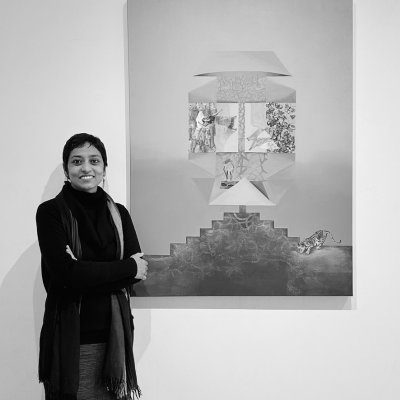
Malavika Rajnarayan is based in Vadodara, Gujarat. She studied painting at the College of Fine Arts, Karnataka Chitrakala Parishath (B.F.A, 2003), and at the Faculty of Fine Arts, M.S. University of Baroda (M.V.A, 2006). She also works with the Azim Premji Foundation in designing and developing arts curriculum for all stages of school education, and is visiting faculty at the Azim Premji University, Bhopal. She has presented solo shows at Anant Art, New Delhi and has exhibited her work in several other group exhibitions both within India and internationally. As an artist and educator, her work extends to lectures and workshops for a wide range of students and audiences, particularly in non-urban contexts. She has been an artist-in-residence at The Collective Studio Baroda; The Contemporary Artists Centre, Troy, New York; at CAMAC Centre for Art in Marnay sur-Seine, France, and a collective residency as a member of Surfatial at ZK/U, Berlin. She was the recipient of the Nasreen Mohammedi scholarship for post-graduate study in 2005 and the Promising Young Artist award by the Fundacao Orient, Goa in 2003. Malavika’s paintings use the human figure to create narratives that are infused with a feminine sensibility. Her background in Indian classical music as well as her interest in the progression of Indian and Asian knowledge traditions form the basis of her inquiries. Her visual language is informed by miniature painting traditions, where the poignancy of ideas are conveyed through beauty, grace and poetry.
मालविका राजनारायण ह्या गुजरातमधल्या वडोदरा येथे राहतात. त्यांनी कर्नाटक चित्रकला परिषदेच्या कॉलेज ऑफ फाइन आर्ट्समधून चित्रकलेचे शिक्षण घेतले. २००३ साली त्यांनी बी.एफ.ए. ही पदवी मिळवली. त्यानंतर त्यांनी एम. एस. युनिव्हर्सिटी, बडोदा येथील फॅकल्टी ऑफ फाइन आर्ट्समध्ये पुढचे शिक्षण घेतले. २००६ साली त्यांनी एम.व्ही.ए. ही पदवी मिळवली. त्या अझीम प्रेमजी फाउंडेशनसोबतही काम करतात. शाळेच्या सर्व स्तरांसाठी कला-अभ्यासक्रम विकसित करण्याचे काम त्या करतात. तसेच, त्या भोपाळ येथील अझीम प्रेमजी विद्यापीठात अभ्यागत अध्यापक म्हणूनही शिकवतात. त्यांनी नवी दिल्लीतील अनंत आर्ट येथे स्वतंत्र प्रदर्शने सादर केली आहेत. तसेच भारतात आणि परदेशात भरलेल्या अनेक समूह-प्रदर्शनांमध्येही त्यांच्या कलाकृती प्रदर्शित झाल्या आहेत. कलाकार आणि शिक्षिका म्हणून त्या विविध विद्यार्थ्यांसाठी आणि प्रेक्षकांसाठी विविध व्याख्याने देतात आणि कार्यशाळा घेतात. विशेषतः शहरांबाहेरील भागांमध्ये कलाशिक्षण पोहोचवण्यावर त्यांचा भर असतो. त्या अनेक ठिकाणी निवासी कलाकार (आर्टिस्ट-इन-रेसिडेन्स) म्हणूनही सहभागी झाल्या आहेत. त्यांत वडोदऱ्यातील द कलेक्टिव्ह स्टुडिओ बडोदा, ट्रॉय, न्यूयॉर्क येथील द कंटेम्पररी आर्टिस्ट्स सेंटर, आणि फ्रान्समधील मार्ने-सुर-सेन येथे असलेल्या कॅमॅक सेंटर फॉर आर्ट ह्यांचा समावेश आहे. तसेच, बर्लिनमधील झेडके / यू येथे सर्फेशियल ह्या समूहाच्या सदस्य म्हणून त्यांनी सामूहिक रेसिडेन्सीमध्येही भाग घेतला होता. २००५ साली त्यांना पदव्युत्तर शिक्षणासाठी नसरीन मोहम्मदी पाठ्यवृत्ती मिळाली. त्याआधी, २००३ साली गोव्यातील फुंदासॉव ओरिएंते तर्फे त्यांना ‘प्रॉमिसिंग यंग आर्टिस्ट’ हा पुरस्कार देण्यात आला होता. मालविकांच्या चित्रांमध्ये मानवी आकृत्यांमधून कथा उलगडत जातात. ह्या कथांमध्ये स्त्री-मनाची संवेदनशीलता जाणवते. भारतीय शास्त्रीय संगीताची पार्श्वभूमी आणि भारतीय तसेच आशियाई ज्ञानपरंपरांबद्दलची त्यांची उत्सुकता ह्यांचा त्यांच्या विचारांवर आणि कलाकृतींवर प्रभाव आहे. त्यांच्या चित्रांची दृश्यभाषा लघुचित्रशैलीच्या परंपरेतून आकाराला आली आहे. सौंदर्य, नजाकत आणि काव्यात्मता ह्यांच्या माध्यमातून त्या आपल्या कल्पना आणि भावना व्यक्त करतात.




2 Comments
Nirali Lal
What a wonderful world to enter into… a rhythm, a pattern, a flow. Thank you, Malavika, for sharing this beautiful space through words and paint.
Geetika
Wow. Such illustrative details of the parallel world of sound with rhythm you experienced in your home and while painting. Thanks for sharing your thoughts and work.