



I am delighted to share हाकारा । hākārā’s final issue of 2025, centered around the theme, ‘To Return’. Although it reaches you at the end of the year, our work on it had actually begun last year. Back then, a group of artists and researchers from Europe and India reached out, expressing interest to collaborate with us on curating and publishing this edition. The idea was to bring it out in both, print and online formats, and we began that journey with great enthusiasm. But along the way, we realized that we could not agree on the conceptual framework that would hold the issue together. We were all excited to explore ‘returning’ as the central theme but our approaches were different. They wanted to approach it through a specific ideological lens. We, on the other hand, wanted to open up the theme through personal reflections, imaginative explorations, and a broader socio-political ideas. Eventually, we decided to part ways.
Even so, those discussions brought us invaluable clarity about what we want हाकारा । hākārā to be. They strengthened our belief that an idea becomes richer when viewed from multiple perspectives. They also reminded us of हाकारा । hākārā’s global reach—how people across cultures, artistic practices, engage with it in ways we couldn’t have imagined. Experiences like these continue to shape how we curate and create हाकारा । hākārā. As we move forward, we keep reflecting on what we learn along the way. And fittingly, in this, our 24th edition, we have woven the entire issue around the idea of looking back and returning.
When we try to make sense of the experiences that come our way, we pause for a moment. And in that pause, we find ourselves returning to the same experience, or through them, to other memories, objects and thoughts. We think about them, try to understand them, and in the process, find new threads to reflect on. Sometimes this reflection turns into a form of creative expression. I am sure the same thing happens on a wider, societal level too. Both individuals and communities turn back to examine what has shaped them, and through that turning, a new kind of perspective becomes possible. In this 24th edition of हाकारा । hākārā, we’ve tried to explore that perspective.
On the surface, “returning” feels simple enough. But when we look deeper, we realise how layered, delicate, and thought-provoking the experience of returning can be. All of us return for different reasons. We stop in the middle of our days because a slipped moment suddenly comes back to us, or we recall a conversation that ended halfway, or a tune we once heard starts circling in our ears again. We do not need anyone’s permission, every time, to return. A sound, a smell, an unexpected silence, or the feeling of a conversation pausing can pull us inward. In those moments we realise that there are things we are not yet ready to let go of. Some experiences still stay with us. Some burdens, too, we continue to carry.
The contributions we received in response to our call of ‘to return’ look at the idea from many different perspectives. Among these, some revisit iconic artworks, some re-examine literary works, and some gently reopen moments that once touched the heart. How does this kind of looking back shape our daily lives, our ways of thinking, and our emotional worlds? What does it really mean to return to moments or places that have passed or been left behind? When we turn back to something or someone, is it they who have changed, or is it our way of seeing? And what kinds of artistic forms emerge from this act of returning? With such questions in mind, the writers and artists in this issue of हाकारा । hākārā have presented their works. Some contributors lean into nostalgia, while others hold nostalgia and critical awareness together. Some returns feel quiet, while others are restless and insistent. A few artists choose to go back to childhood memories, to family customs, or to conversations that may have ended but still linger within. Some works begin from a personal space yet open outward to the social and political events and tensions that shape everyday life. Others engage with environmental concerns, drawing attention to the slow violence unfolding around us, the unease of disappearing habitats, and the unsettling sense that the ground beneath us is shifting.
The writers and artists in this 24th edition bring their own rhythm to the act of returning. Each one arrives with their own inner space, and as you read, those inner worlds slowly begin to reveal themselves. Their awareness of the world around them becomes visible too. Even though the works are rooted in particular social and geographical contexts, I am certain that the ideas and echoes within them will travel far beyond those boundaries.
Among these works is Chandrakant Kaluram Mhatre’s Marathi translation of William Butler Yeats’s poem, The Tower. In the poem, an ageing writer looks back at his own past. His gaze does not come from nostalgia but from a deep inner need to understand himself. He feels the tiredness of his body, yet his mind remains bright, restless, eager to create. So he turns to look at an old structure, the tower, and in doing so remembers the people he once met. He rekindles old memories. He tries to make sense of all that has happened in his life, searching for meaning in the shape of everything he has lived through.
When we read the translation of Yeats’ poem, we sense that when he looks back, he is trying to make meaning of his own life. It is not as if he has understood everything. In fact, the struggle he carries and the confusion of the world around him must have made the act of finding meaning feel almost impossible. Yet he keeps searching. He accompanies not only his past but also the person he once was. And through that companionship, a kind of inner ‘tower’ begins to appear before him. A similar tower can rise within our own minds too.
Alongside Yeats, we have also published Rituparna Sengupta’s English translation of a Punjabi poem by Amrita Pritam. This poem, written for her younger, close friend Imroz, holds Pritam’s delicate emotional world with great tenderness. Whether it is Yeats or Pritam, when the rhythm of poetic language is understood with care, when its emotional truth is held gently, and when its cultural weave remains intact, translation becomes an act of creation born from inner energy. At such moments, at हाकारा । hākārā, our belief in translation as a bridge between languages, cultures, and minds becomes even stronger.
To look back is to bring those fleeting experiences, those small everyday movements, those birds that swing past us, and those people who once crossed our paths and then disappeared, back into the space of our inner world. It is a pause we take to revisit our experiences, to remember them, and to awaken the memories that have begun to fade. From this process, creation begins to take shape. While holding on to traces of time that keeps slipping away, Shruti Ramlingaiah writes in her prose poem Time flies, like a harried sparrow: “Time flies when people are around. Things around, running a round. Among the crowd, walking past traffic signals, rarely do I notice a person whole, always drifting, harried like a sparrow. Not knowing why they stopped, or dropped the nesting material held in their beak, to feed on grains and fly off.” In this way, when Shruti looks closely at time and space in her poem, she is not simply revisiting the past. She is entering a poetic experience of dwelling within that space once again.
At this point, I think of Vijay Tendulkar’s reflection- ‘He Sarv Kothun Yete’ (Where Does All This Come from). Here’s the poet’s wakefulness. Poets are alert. Someone might be drawn to the English poet William Butler Yeats, some other poet might call upon the presence of Amrita Pritam, and in her poem He Antar Sarat Ka Nahi (Why Doesn’t This Distance End), Anagha Mandavkar turns toward the great Marathi poet B. S. Mardhekar’s poem. For Anagha, Mardhekar’s poem, Ajun Yetoy Vaas Phulaana (The Flowers Still Have Fragrance), published in 1951, becomes a frame for her own contemplation and return. While marking the way “the face of humanity has become fractured” in today’s times, Anagha recalls the characters and themes in Mardhekar’s poem and weaves them into her own poetic fabric. This weaving creates a sense of dialogue with Mardhekar’s poetic world within her work. The landscapes, figures, and textures of language in Mardhekar’s poem offer her threads of creation. By returning to Mardhekar, Anagha blurs the boundaries between here and there, then and now, giving her poem a layered, intermingled form.
While reading the writings published in this 24th issue, one more thing becomes evident. It is the wakefulness of the contributors in paying close attention to the form of their expression. The quest for returning opens up newer possibilities of formal creations for poets. The repetitions that come with returning, and the quiet rhythmic patterns rising from them, become part of the creative search. Tanvi Jagdale captures this beautifully in her poem, showing how creation deepens each time we come back to refrain from the same moment. The urge to create and that gentle pull to “circle back to the start” over and over become the very moment where Tanvi discovers her own voice. It is the sam—the starting point, the reference beat from which the cyclical rhythmic pattern emerges and to which it always returns. One can sense it in her poem:
The rule of the sam
Is to circle back to the start
To exchange a handful
Of the constellations’ gift.
Dr. Keshavchaitanya Kunte reflects on this inner cycle of the poet returning to the sam, and the creative transformation that emerges from it, through the lens of Hindustani art music in his essay in this issue. In his view, the aesthetics of Hindustani art music rest on a fundamental principle of returning. Music is a play of sound and silence, and the journey of sound must inevitably circle back to silence at the start the cycle. This return is a movement from the expressed to the unexpressed, and then back again — and it is through this cycle that music attains its fullness. Dr. Keshavchaitanya writes: “In the context of rhythm, the starting point of a taal is the sam. Each rhythmic cycle begins at the sam, moves forward, and must return to the sam again to continue. Reaching the sam successfully is considered the highest aesthetic principle in Hindustani music, because without arriving at the sam, all effort falls apart.”
To return is not merely a technique for structuring poetry or composing music; it becomes a philosophical vantage point. It is a way for the artist to look at themselves and the world around them. There is a sense of wholeness found in this act of return. The creative process wanders, circles back, and eventually comes to rest at a single point. It lingers there, spinning in its own rhythm, before its onward journey begins anew. Of course, there are times when we don’t find the rhythm we need. Sometimes, what we have created feels insufficient. Or perhaps, it feels too late to turn back. And yet, we try. We hold onto the desire to shift, to move. In that very attempt, our movement takes shape, and the cycle of creation spins on.
While editing this issue with the हाकारा । hākārā team, I felt as though I were walking down the corridors of my old school building, peeking through the doors and windows. The expression of every artist and writer felt like a distinct scene inside one of those rooms. In every room, we sensed a different meaning waiting to be found. Each holding a different kind of return. One room was quiet, another mischievous, a third rowdy, while yet another held only curious gazes looking back at us.
I hope your footsteps turn toward these rooms, too. Not as a formality, but simply out of an urge to look closely at the world around you, may you discover the meanings hidden here. I hope you will quietly witness and experience what it truly means to enter a room, and then to return to it? Every room here compelled us to think; I hope you find the same experience.
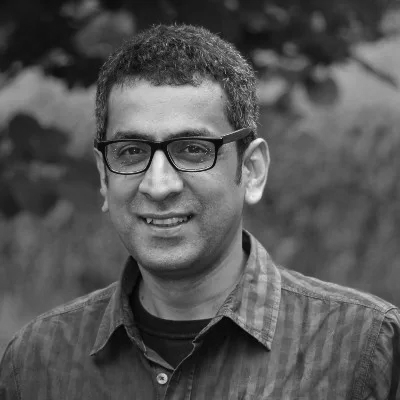
Image Courtesy : Harmeet Singh Rahal.
Share this:
- Click to share on Facebook (Opens in new window) Facebook
- Click to email a link to a friend (Opens in new window) Email
- Click to share on X (Opens in new window) X
- Click to share on LinkedIn (Opens in new window) LinkedIn
- Click to share on WhatsApp (Opens in new window) WhatsApp
- Click to share on Telegram (Opens in new window) Telegram