


हाकारा । hākārā is an independent bilingual journal published online in Marathi and English. We are happy to collaborate with Ray Media & Films and documentary film director Rahul Narwane to document a series of conversations with artists and writers working across different practices and languages.
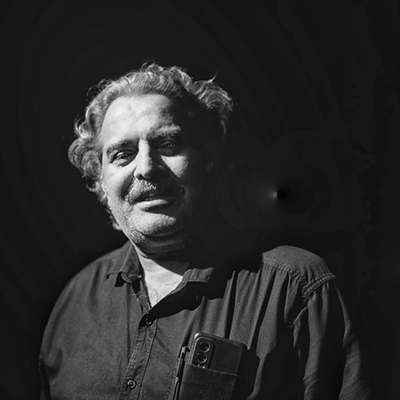
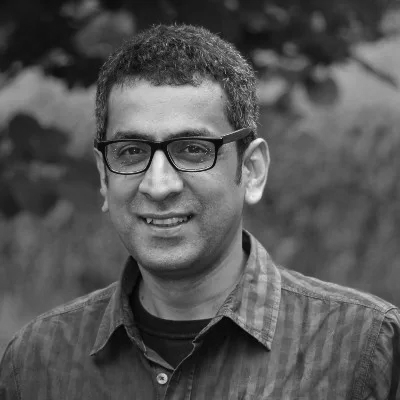
As part of this collaboration, playwright and editor of हाकारा । hākārā, Ashutosh Potdar, spoke with Pradeep Vaidya—co-creator of Pune’s black box theatre, The Box—along with Rupali Vaidya. Pradeep discussed their journey and experiences in creating the vibrant theatre space of The Box in Pune. Prabha Kulkarni has written a response note to this conversation, which can be read below.
Acknowledgements
Research: Purvi Rajpuria
Editing Support: Satyam Avadhutwar and Shivam Panchbhai
Editing: Ray Media & Films
Recording: The Box, Pune
Unboxing ‘The Box’: Experimentation with the Black Box Theatre : Prabha Kulkarni
You are seated within a murmuring crowd and the third bell is heard. Shhh… the play is about to start! But which theatre are you in? Are you at Bal Gandharva, waiting for the curtain to open? Or at Prithvi, waiting for the actors to arrive, sitting so close to them… Or, you must be at ‘The Box’, seeing audiences on your front, right, and left, feeling the experiment of the play you are just about to watch!
The experience of being in a space, watching a performance is always in flux. What you watch feels different in different theatres due to how the environment and architecture reflect the performance. Proscenium theatres are crucial, but there is a need to go beyond them for plays that require an intimate setting or for people who want to experiment.
Pradeep Vaidya, co-creator of Pune’s black box theatre, ‘The Box’, discusses his journey and experiences with हाकारा । hākārā’s editor Ashutosh Potdar, in creating such a space. He got involved with the Progressive Dramatic Association (PDA) in 1995 after moving to Pune and started watching works by Atul Pethe, Sandesh Kulkarni, and others at Sneha Sadan. Vaidya formally performed a poetry ensemble in 1998 and later became a light designer, especially after designing lights for Mohit Takalkar’s Pratibimba, after the designer cancelled last-minute.
Around 1999-2000, theatre makers like Mohit Takalkar were exploring new ideas, which met resistance in PDA. Sneha Sadan became an epicentre of parallel art, catering to performances that did not need the glamour of bigger spaces. This conceptual change created the need for smaller spaces that allowed an intimacy between the artist and the audience. Groups like Samanvay were one of the groups that created plays that suited the aura of Sneha Sadan very well. However, the activities at Sneha Sadan eventually halted. Later, Sudarshan Rangamancha successfully took on the comfortable “my space” feeling previously offered by Sneha Sadan. It satisfied theatre makers who wanted to talk to no more than a hundred people, and also provided technical facilities.
Theatre during this time began looking at familial and socio-political contexts, resulting in layered content. While popular theatre had its razzmatazz, parallel theatre leaned towards minimalism. This aesthetic was born out of necessity and used existing material. Small frame theatre competed with commercial celebrity-led plays and the new visual appeal of television, which prompted people like Mohit Takalkar, Aakarsh Khurana, Sunil Shanbag and others to respond with new conceptualisations.
Spaces like Sudarshan and groups like ‘Samanvay’ became an epicentre, bringing all art in Pune together under one roof, aided by the non-profit necessitating structure of the Maharashtra Cultural Centre. Mohit Takalkar with his unique aesthetic, emerged as a vital force, forming his group Aasakta, because his vision was not possible within PDA’s structure. Vaidya notes that his generation feels an urge to follow the footsteps of stalwarts like Bal Kolhatkar, Shreeram Laagoo and others, yet also go against them, leading to a unique theatrical path.
This context led to the constant need for a comfortable, flexible space for experiments. Vaidya conducted workshops and performances in welcoming spaces like Sudarshan or the parking area of Jyotsna Bhole Sabhagruha, which were also spaces that allowed for failure with no audit or judgement. Vaidya slowly built his expertise in light designing through experimentation, eventually gaining commercial sustenance. Working with Aasakta was fulfilling due to the dedication of multiple technical rehearsals. He believes the designer, as a conceptualiser, should operate every show. Working with Atul Pethe’s Satyashodak helped him build his lighting inventory, which grew significantly from rentals. His works like Kajvyancha Gaon and workshops like Expression Lab, cemented his need in acquiring his own space for more freedom in his work. After a much smaller black box space created by Vaidya became popular for performances, he eventually found the current location of ‘The Box’. Vaidya planned the design himself and the theatre inventory was built alongside performances. Hence, ‘The Box’ is built by artists for artists.
The journey faced severe financial challenges with fourteen lakh rupees spent solely in paying rent of the yet not functioning space due to COVID 19 restrictions. There was, however, no intention to go back. Today, The Box Hub has five spaces with a café. The vision remains to provide theatre makers with their own space with an open and welcoming work culture ensuring the feeling of ownership for everyone. Most performances here have been in a non-proscenium format with the encouragement of performing even on weekdays. Interdisciplinary practices are reinforced, like the Out of the Box initiative, where artists created artworks for a black art gallery, leading to collaboration between various arts. The Box is making small profits, having received support from industries, friends and theatre professionals. The people, policies and strategies make the difference in running the space.
All art is vital to human experience and so is a space in sharing that experience. People, performances, art, and their connection keep these spaces alive. If you walk through Pune’s Erandawane today, the cyan blue of ‘The Box’ makes you turn your head. The colours, yellow lights, bustling queues, make you feel so connected to the vibrant space, with everyone sharing one love: the love for theatre, the love for expression.
Share this:
- Click to share on Facebook (Opens in new window) Facebook
- Click to email a link to a friend (Opens in new window) Email
- Click to share on X (Opens in new window) X
- Click to share on LinkedIn (Opens in new window) LinkedIn
- Click to share on WhatsApp (Opens in new window) WhatsApp
- Click to share on Telegram (Opens in new window) Telegram
2 Comments
nadi
Thanks, Hakara, and Ashutosh Potdar for the questions that brought out the story.
Such a pleasure listening to this.
All the more, because it brought back memories of having benefitted from, being audience of and witness to the historical journey that this conversation speaks about.
The Box is my favourite place in the city, and an integral part of my life.
Salaams to all the efforts that went into it.
Gratitude, as always , to all the Pune natakarmis. One is able to survive because of the intellectual inspiration and joy that your work gives us.
nadi
Rupali and Pradeep, all the very best for all your future work.